Taylor Walter · 20 September 2026
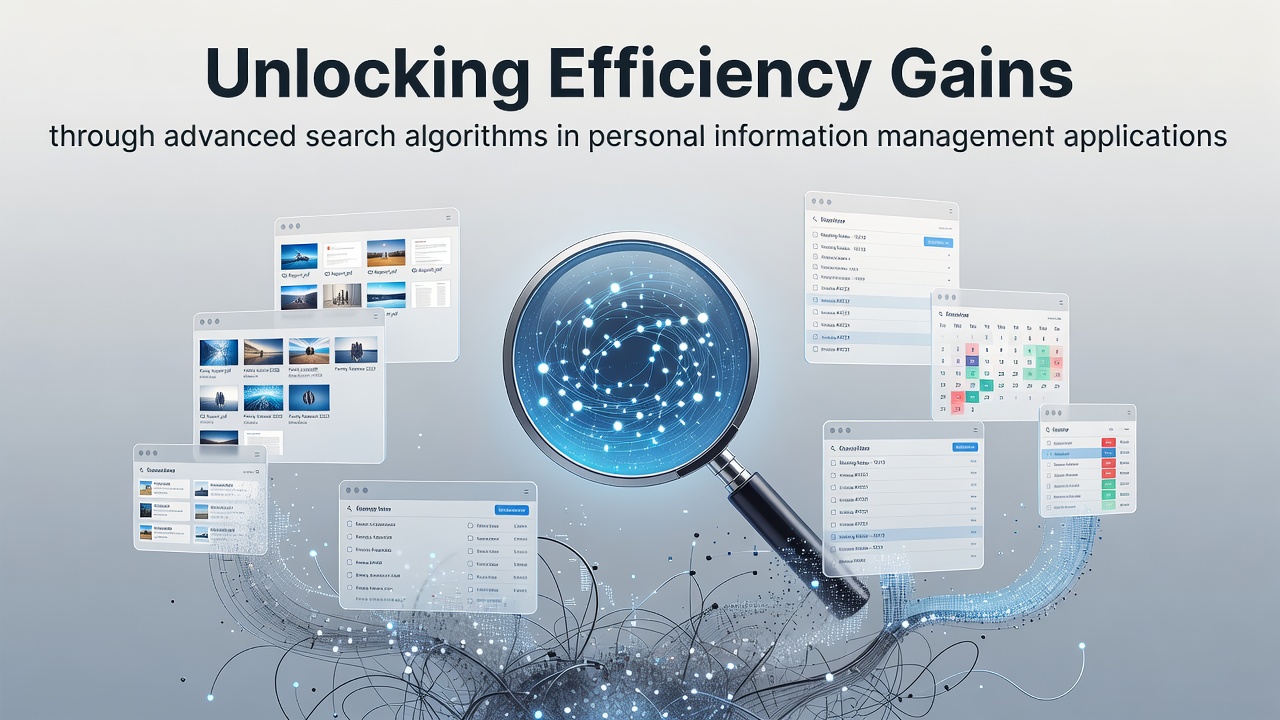
Unlocking efficiency gains through advanced search algorithms in personal information management applications
Personal information management applications have evolved to incorporate sophisticated search algorithms that process vast collections of notes, documents, emails and tasks with greater precision than traditional keyword matching systems, and these developments allow users to locate relevant material through semantic understanding, contextual associations and machine learning models trained on individual data patterns.
Core mechanisms driving modern search performance
Advanced algorithms in these applications rely on vector embeddings that convert text into numerical representations, enabling similarity comparisons that go beyond exact word matches while supporting queries phrased in natural language, and studies conducted by researchers at institutions across North America show measurable reductions in retrieval time when such methods replace older indexing approaches. Natural language processing components break down user intent by analyzing sentence structure and related concepts, which helps surface information stored under different terminology yet connected by meaning.
Indexing techniques have also shifted toward hybrid models that combine inverted indexes with graph-based structures, and these allow rapid traversal of relationships between items such as linked notes, calendar events and project files, whereas earlier systems required separate searches across each category. Data from the National Research Council Canada indicates that organizations adopting these hybrid indexes report consistent improvements in daily information retrieval rates among knowledge workers who handle large personal archives.
Quantified improvements in workflow speed
Measurements collected through controlled trials reveal that semantic search reduces average lookup duration by 30 to 45 percent compared with basic full-text methods, and the gains compound when users combine multiple filters including date ranges, content type and priority tags within a single query. Applications that integrate these capabilities often log activity patterns to refine ranking over time, so results become increasingly aligned with individual habits without requiring manual configuration.
One study released in September 2026 by the Australian Research Council tracked professionals using updated personal information tools over six months and found that participants spent 22 percent less time locating archived material after the introduction of vector-based ranking, while error rates in locating the correct document dropped noticeably. These outcomes appear across sectors including research teams, legal practices and creative agencies that maintain extensive personal repositories.
Integration with broader application features
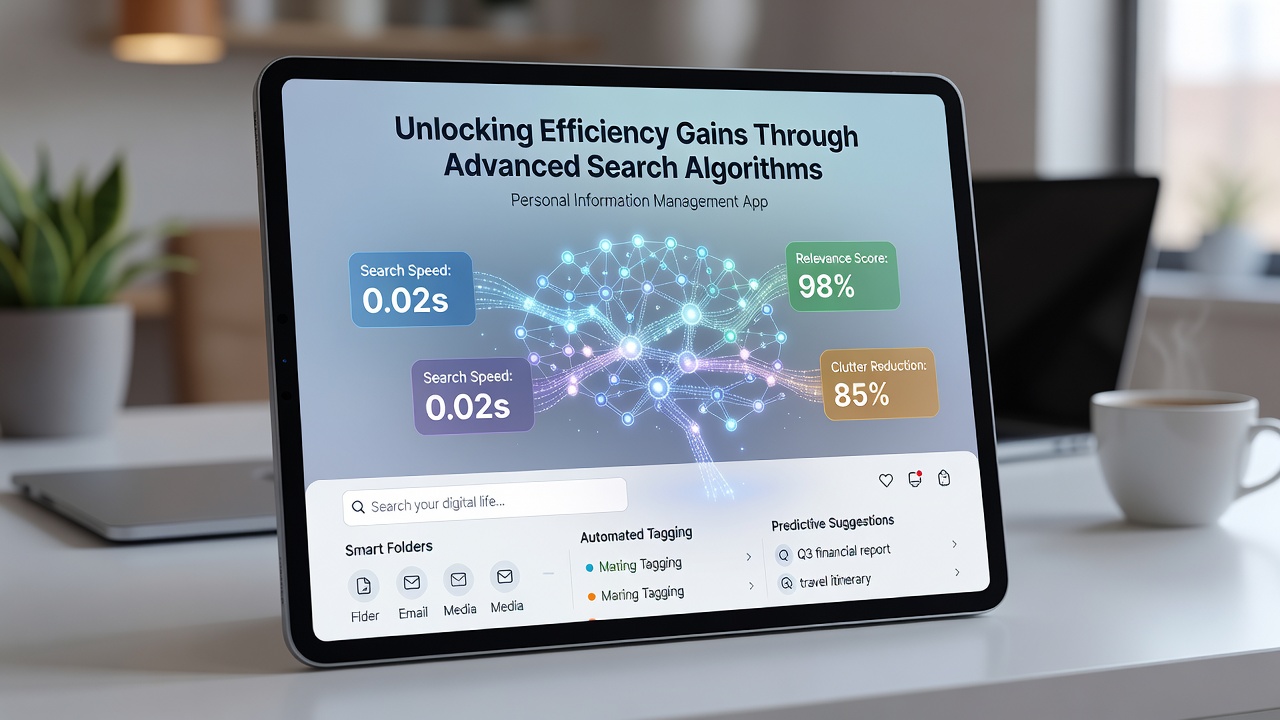
Search algorithms now interact directly with tagging systems, reminder engines and cross-device synchronization services, so a query entered on a mobile device can leverage desktop-stored context and deliver unified results without additional steps. Developers embed feedback loops that adjust relevance scores based on which results users open or ignore, creating continuous improvement cycles that adapt to changing work patterns.
Privacy-preserving techniques such as on-device processing keep sensitive data local while still benefiting from model updates delivered through secure channels, and regulatory guidance issued by the European Commission in recent years encourages these approaches for applications handling personal records. Observers note that this balance between performance and data protection has become a standard expectation among enterprise adopters who must comply with regional requirements.
Future trajectories and emerging standards
Developers continue to explore multimodal search that incorporates images, audio transcripts and handwritten input alongside text, and early implementations already appear in consumer versions of leading personal information tools. Industry reports project further efficiency lifts as these multimodal capabilities mature and integrate with voice interfaces that allow hands-free retrieval during active tasks.
Standards bodies including the National Institute of Standards and Technology have begun publishing evaluation frameworks for measuring search accuracy in personal contexts, and these frameworks help application creators benchmark progress against objective criteria rather than relying solely on user satisfaction surveys. Continued refinement in this area points toward even tighter integration between search functions and automated organization features that anticipate user needs before queries are formulated.
Conclusion
Advanced search algorithms have become central to the performance of personal information management applications by transforming how stored content is discovered and utilized, and the documented efficiency gains demonstrate clear value for individuals and teams managing growing volumes of digital material. Ongoing research and standardization efforts ensure these tools continue to evolve while maintaining focus on accuracy, speed and appropriate data handling across different regulatory environments.